Lab-grown diamonds, set at our bench
We sell lab-grown diamonds made to order: you choose the stone, we set it in a ring we make at our own bench in La Jolla. Same craftsmanship as the estate work we are known for, and a straight answer about what you are buying.
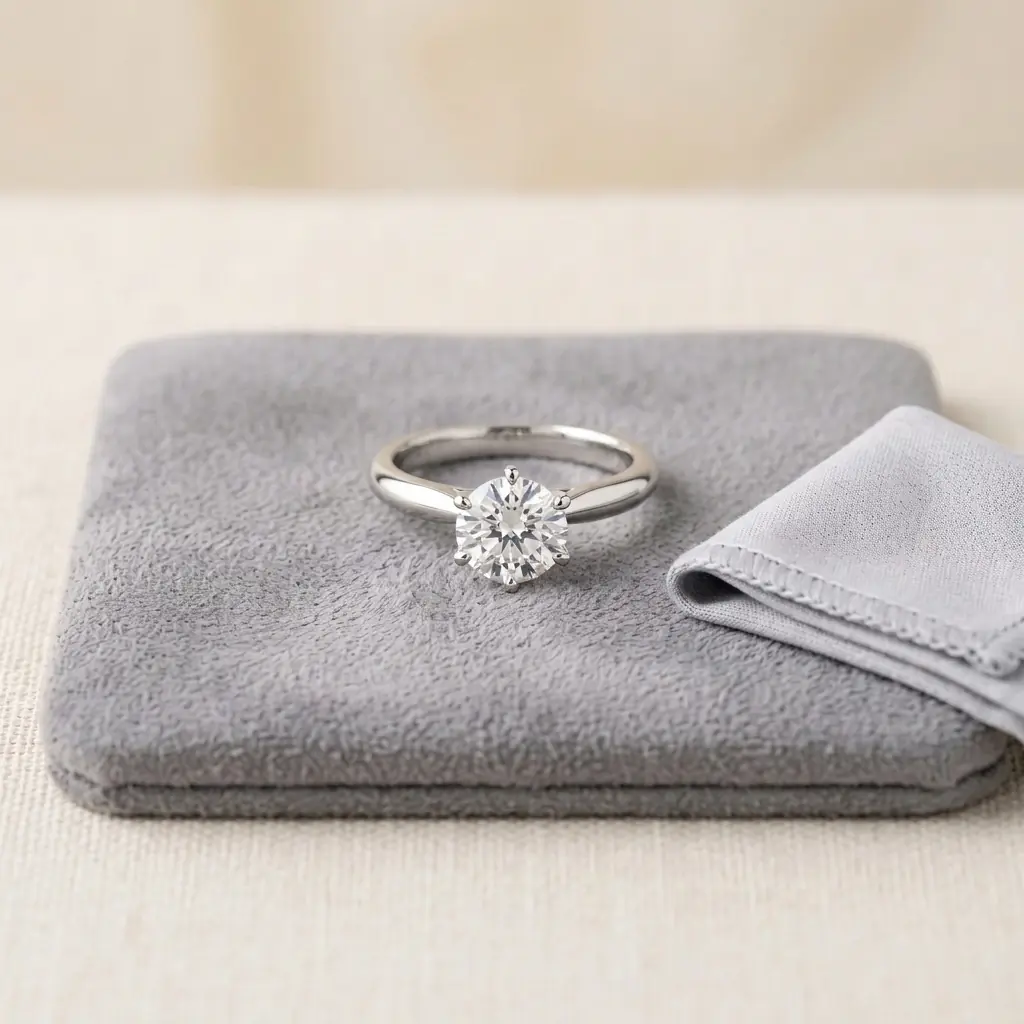
Most places selling lab-grown diamonds have inventory to move. We do not. We are a third-generation jeweler who buys and sells estate pieces every week, and we will source a lab-grown stone for you the same way we source anything else — by asking what you want and going to find it.
That also means you get the answer nobody selling from stock has much reason to give you: what the stone will be worth later. We buy jewelry for a living, so we know. It is in the detail below, and we will say it again across the counter.
If a mined stone is the better choice for you, we will tell you that and show you those instead. You can see what is in the case now while you decide.
Sourced to your brief, then made here.
No stock to push and no pressure to decide on the day. Tell us the budget and the occasion, and we will come back with real options and the grading report for each.
Tell us what you’re afterWhat a lab-grown diamond actually is
A lab-grown diamond is a diamond. Not a simulant, not cubic zirconia, not moissanite — the same carbon lattice, the same hardness, the same optical behaviour. Put one beside a mined stone of equal grade and no jeweler can separate them by eye, which is why identification is done by machine and by the inscription on the girdle.
The difference is where the carbon crystallised. One formed in the earth over an unhelpfully long period; the other in a chamber over a few weeks, by one of two processes — HPHT, which mimics the pressure and heat of the mantle, or CVD, which grows the crystal a layer at a time from a carbon gas. Both produce real diamond.
How they are graded, and what to insist on
The same way mined stones are: cut, colour, clarity and carat, by the same laboratories. GIA and IGI both grade lab-grown, and the report states plainly that the stone is laboratory-grown. Reputable stones also carry a laser inscription on the girdle recording the report number.
Insist on the report, and check the number against the laboratory's own database rather than the seller's paperwork. That is not a lab-grown precaution particularly — we would tell you the same about a mined stone — but the lab-grown market has grown quickly and unevenly, and the discipline matters more in a young market than an old one.
What it costs, and what it will be worth
A lab-grown stone costs a fraction of a mined stone of the same grade, and that gap has widened considerably as production capacity has grown. For a given budget it buys noticeably more carat, or a noticeably better cut at the same size. That is a real advantage and it is why people choose them.
The same forces work against resale. Production keeps getting cheaper, so a lab-grown stone bought today competes with a cheaper equivalent tomorrow, and the secondary market prices accordingly. We buy jewelry for a living, so we will tell you what we would pay for it in five years, and it is a good deal less than you paid us. If you want a stone that holds value, buy a mined one, and we will happily show you those instead.
Neither answer is wrong. A ring you wear every day is not a savings account, and plenty of people would rather have the larger stone and know exactly where they stand. What we will not do is let you find out later.
Why buy one from a jeweler who mostly sells estate
Because we have no stake in which one you pick. We are not a lab-grown retailer with inventory to move; we are a third-generation jeweler who will source whatever you ask for and set it properly. If a mined stone suits you better we will say so, and if lab-grown suits you better we will say that too.
And because the setting is where a ring is actually made or ruined. The stone is a commodity with a grading report; the mount is craft. Ours are made and set at our own bench in La Jolla, by the same people who repair and restore the antique pieces we buy.
Are lab-grown diamonds real diamonds?
Yes. Chemically, physically and optically they are diamond — the same carbon structure and the same hardness. They are not simulants like cubic zirconia or moissanite, which are different materials that only resemble diamond. The distinction is origin, not substance.
Can anyone tell the difference?
Not by eye, and not with a loupe. Separation is done with specialised instruments that read the growth structure, and reputable lab-grown stones are laser-inscribed on the girdle with their report number. A jeweler cannot identify one by looking, which is precisely why the grading report matters.
Do lab-grown diamonds hold their value?
No, and we would rather say so plainly. Production keeps getting cheaper, so today's stone competes with a cheaper equivalent next year, and resale reflects that. We buy jewelry every week, so we can tell you roughly what we would pay for it later — expect considerably less than the purchase price. If holding value matters to you, a mined stone is the better choice.
How much cheaper are they than mined diamonds?
Substantially, and the gap has widened as production has scaled. In practice the same budget buys a noticeably larger stone, or a better cut at the same size. We will quote both against your budget so you can see the trade rather than take our word for it.
Do you keep lab-grown diamonds in stock?
We source them to order rather than holding inventory, which means you are choosing from the graded stones available in the trade rather than from whatever happens to be in our case. Tell us what you are after and we will come back with a short list and the grading report for each.
Will you buy a lab-grown diamond back?
We will look at anything, and we will give you an honest number. Be aware it will be well below what you paid, for the reasons above. We would rather you knew that before you buy than discover it when you come to sell.